

In the manufacturing industry, ensuring the quality of products is of utmost importance. As a supplier of Paint Roller Handle Making Machine, I understand the significance of having strict quality inspection standards for the paint roller handles produced by our machines. In this blog post, I will delve into the key quality inspection criteria that we adhere to, which not only guarantee the performance and durability of the paint roller handles but also meet the diverse needs of our customers.
Material Quality
The foundation of a high - quality paint roller handle lies in the materials used. We source only the finest raw materials for the production of paint roller handles. For plastic handles, we use high - grade polymers that are resistant to wear, chemicals, and environmental factors. These polymers are carefully selected based on their mechanical properties, such as tensile strength and impact resistance.
During the inspection process, we conduct a series of tests on the raw materials. One of the primary tests is the material composition analysis. We use advanced analytical techniques to ensure that the polymers contain the correct proportions of additives and base resins. This analysis helps us to verify that the material meets the required standards for hardness, flexibility, and chemical resistance.
Another crucial test is the colorfastness test. Since paint roller handles come in a variety of colors, it is essential that the color does not fade or bleed over time. We expose samples of the raw materials to different environmental conditions, including sunlight, humidity, and chemical agents, to assess their color stability. Only materials that pass these rigorous colorfastness tests are used in the production process.
Dimensional Accuracy
Precision in dimensions is vital for paint roller handles. Handles that are too large or too small may not fit properly with the paint roller frames or may be uncomfortable for users to hold. Our Paint Roller Handle Making Machine is designed to produce handles with high dimensional accuracy.
We use precision measuring tools, such as calipers, micrometers, and coordinate measuring machines (CMMs), to check the dimensions of the paint roller handles. These tools can measure the length, diameter, thickness, and other critical dimensions with high precision. We have established strict tolerance limits for each dimension, and any handle that falls outside these limits is rejected.
For example, the length of a paint roller handle may have a tolerance of ±0.5mm. If a handle is measured to be outside this range, it will not be approved for further processing. This strict control over dimensional accuracy ensures that our paint roller handles are consistent in size and fit perfectly with the corresponding paint roller components.
Surface Finish
The surface finish of a paint roller handle not only affects its appearance but also its functionality. A smooth surface finish reduces friction when the user holds the handle, making it more comfortable to use. It also prevents the accumulation of paint and dirt, which can affect the performance of the paint roller.
We inspect the surface finish of the paint roller handles using visual inspection and tactile evaluation. During visual inspection, we look for any visible defects, such as scratches, dents, or uneven surfaces. Even minor scratches can be a sign of poor manufacturing quality and may affect the overall performance of the handle.
Tactile evaluation involves feeling the surface of the handle to check for smoothness. We run our fingers along the surface to detect any rough spots or irregularities. In addition, we use surface roughness measuring instruments to quantify the surface roughness. The surface roughness of our paint roller handles is typically maintained within a specific range to ensure optimal comfort and performance.
Structural Integrity
The structural integrity of a paint roller handle is essential to withstand the forces applied during painting operations. Handles that are prone to breakage or deformation can cause inconvenience to users and may even pose a safety hazard.
We conduct a series of mechanical tests to assess the structural integrity of the paint roller handles. One of the most common tests is the bending test. In this test, we apply a controlled bending force to the handle to simulate the forces it may experience during normal use. The handle should be able to withstand a certain amount of bending without breaking or deforming permanently.
Another important test is the impact test. We drop the paint roller handles from a specified height onto a hard surface to evaluate their resistance to impact. Handles that pass the impact test are more likely to survive accidental drops during painting, which is a common occurrence on job sites.
Assembly Compatibility
Paint roller handles need to be compatible with other components of the paint roller, such as the roller frame and the cage wire. Our Paint Roller Cage Wire Making Machine and Paint Roller Handle Bending Machine are designed to produce components that fit together seamlessly.
During the quality inspection process, we perform assembly tests to ensure that the paint roller handles can be easily and securely attached to the roller frames and cage wires. We check the fit between the handle and the frame, as well as the connection between the handle and the cage wire. Any handle that does not fit properly or requires excessive force to assemble is rejected.
For example, the connection between the handle and the cage wire should be strong enough to prevent the wire from coming loose during use. We use torque wrenches to measure the tightening force required to attach the handle to the cage wire, and we ensure that it meets the specified standards.
Hygiene and Safety
In addition to the above - mentioned quality criteria, we also pay close attention to hygiene and safety aspects. Paint roller handles may come into contact with paint, which can contain various chemicals. Therefore, it is essential that the handles are made of materials that are non - toxic and do not release harmful substances.
We conduct chemical analysis on the paint roller handles to ensure that they comply with relevant safety and hygiene standards. We test for the presence of heavy metals, such as lead and mercury, as well as other harmful chemicals. Only handles that pass these chemical tests are considered safe for use.
Conclusion
As a supplier of Paint Roller Handle Making Machine, we are committed to providing our customers with high - quality paint roller handles. Our strict quality inspection standards cover every aspect of the manufacturing process, from material selection to final assembly. By adhering to these standards, we ensure that our paint roller handles are durable, comfortable to use, and compatible with other paint roller components.

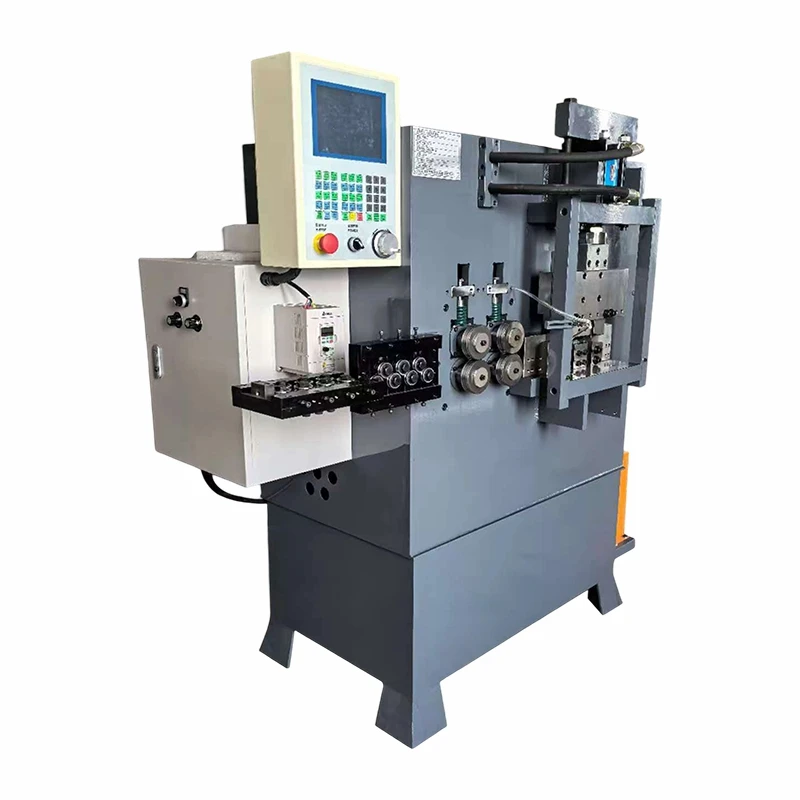
If you are in the market for paint roller handles or our paint roller handle making machines, we invite you to contact us for further discussion. We are more than happy to provide you with detailed information about our products and services, and we look forward to the opportunity to work with you.
References
- ASTM International. (20XX). Standard test methods for plastics.
- ISO Standards. (20XX). International standards for quality management in manufacturing.
- Industry reports on paint roller manufacturing and quality control.